

Why Weight Comes Back After a Diet, and What Changes the Pattern


You lost the weight, felt proud, and then the kilos crept back. If you are wondering why weight comes back after dieting, you are not alone, and it is not simply a matter of effort. This article explains what happens in your body, which other factors can play a part, and where professional support fits in Australia.
Why weight comes back after dieting, and how common it is
Regaining weight after a diet is common, and it usually reflects how your body responds to weight loss, not a lack of effort. Researchers describe a high rate of weight regain after diet-induced weight loss (Source: Sumithran et al., New England Journal of Medicine, 2011).
Estimates of exactly how many people regain vary between studies and sources, so treat any single number with care. Repeated loss and regain has a name: weight cycling, or yo-yo dieting.
The group affected is large. According to the Australian Institute of Health and Welfare's overweight and obesity report, about 67% of adults, around 13.2 million people, lived with overweight or obesity in 2022-24 (Source: AIHW, Overweight and obesity, 2026).
Among adults, abdominal obesity rose from 41% to 48% between 2017-18 and 2022-24, and overweight and obesity was the biggest risk factor for ill health and death in Australia in 2024 (Source: AIHW, 2026).
What happens in your body after you lose weight
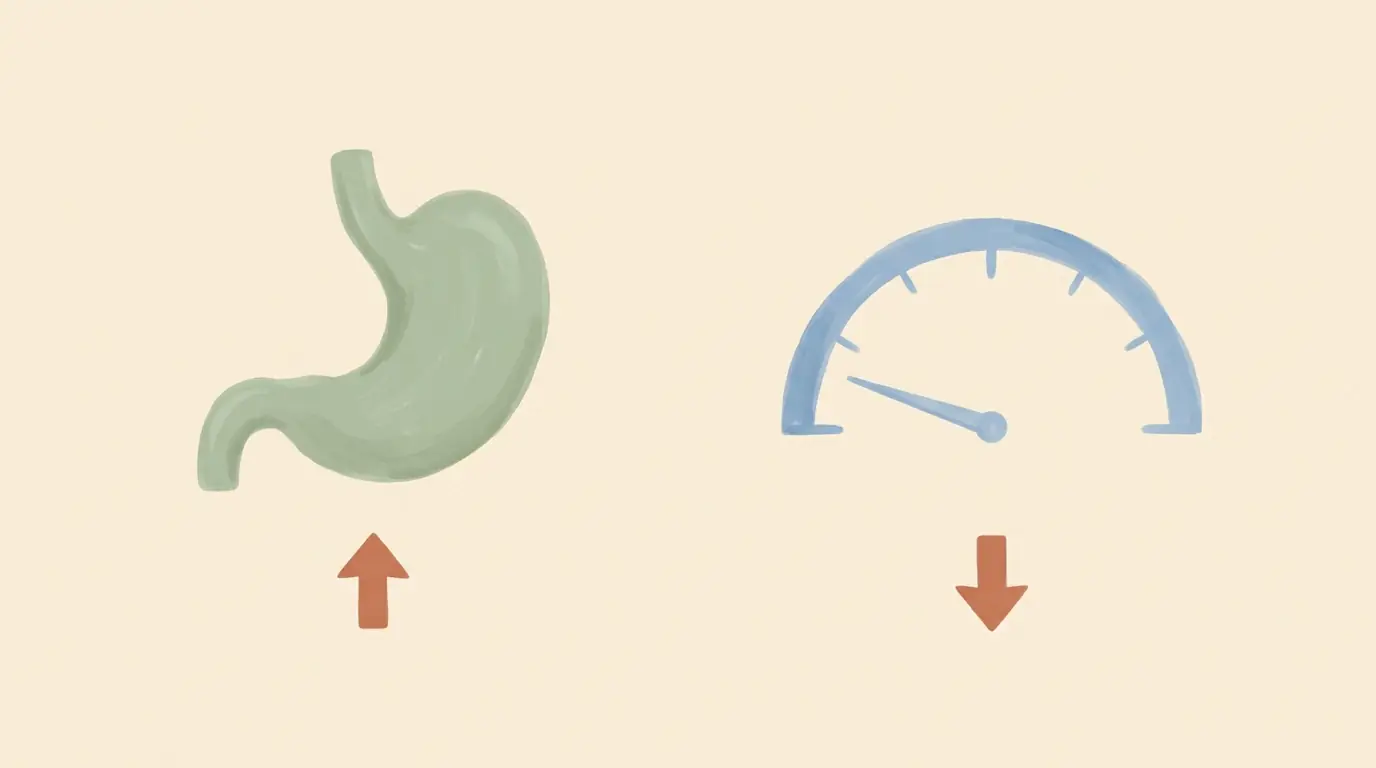
After weight loss, your body tends to push back. Hunger signals rise and the energy you use at rest can fall, which makes regain more likely.
In a University of Melbourne and Austin Health study, 50 adults with overweight or obesity lost about 13 kg on a 10-week very-low-energy diet. Hormones that influence hunger shifted in ways expected to increase appetite, and the changes were still present a year later (Source: Sumithran et al., New England Journal of Medicine, 2011). The university's release reported that participants regained about 5 kg over that year (Source: University of Melbourne, 2011).
Appetite and hunger signals
Leptin is a hormone that signals fullness, and ghrelin signals hunger. After weight loss, leptin tends to fall and ghrelin tends to rise, so you may feel hungrier and less satisfied by the same meal (Source: Sumithran et al., 2011).
Energy use
Your basal metabolic rate is the energy your body uses at rest. After weight loss it can fall by more than your smaller body size alone would explain, a process called metabolic adaptation. How much it happens varies between people, and research is still developing.
The set point idea: what is established and what is debated
Set point theory suggests the hypothalamus, the part of the brain that helps control weight, works to defend a weight range your body is used to. Researchers have measured changes in hunger and energy use after weight loss. Scientists still debate whether your body defends one fixed number.
| What shifts | How it can feel | Why a diet alone may not address it |
|---|---|---|
| Appetite hormones (leptin, ghrelin) | Hungrier, and less full after meals | In the Melbourne study, hunger-related changes were still present a year later |
| Basal metabolic rate | Weight creeps up on the amount that once held it steady | Eating as you did at your old weight can lead to regain |
| Brain weight regulation (hypothalamus, set point) | Weight drifts back towards a previous range | Researchers are still working out how strongly this applies, so experiences differ |
| Habits and surroundings | Old routines return when the diet ends | A diet with an end date may not include a plan for what follows |
Why the way a diet ends may matter
Some diets focus on the weight-loss phase and say little about what comes after. That gap may be part of why weight comes back after dieting.
Strict, all-or-nothing rules can be hard to keep. When one slips, it can feel like the whole diet has failed, and old habits return. A short plan with no maintenance phase can leave you without a guide for the weeks after the last weigh-in.
Your surroundings matter too. Large portions, easy access to processed, calorie-dense food and less daily movement can all push in the other direction.
These are features of the modern food and activity environment, not personal faults. Researchers call this the obesogenic environment. For a shorter read on the maintenance side, see our guide to keeping weight off over the long term.
Other factors a diet alone will not fix
Sometimes the answer sits outside your food diary. Health conditions and life factors can affect weight and appetite, and they are worth raising with a registered health practitioner.
Examples include thyroid conditions, polycystic ovary syndrome (PCOS), sleep apnoea, depression and anxiety, and the hormonal changes of perimenopause and menopause. Some medicines can also affect weight. If you take any, do not stop them without advice, and ask your practitioner or pharmacist about it.
Poor sleep and ongoing stress can influence appetite. Some people also eat in response to stress or low mood. Both are worth raising with your practitioner.
A practitioner may also order pathology tests, such as thyroid function, glucose and cholesterol, to look for contributors.
What Australian sources say about keeping weight stable

In Australia, the RACGP describes obesity as a long-term health matter that needs ongoing management (Source: RACGP, 2025).
The RACGP released an updated obesity position statement in March 2025. It calls for more government funding for longer GP consultations and fairer access to care, and describes obesity as a condition that can involve periods of relapse and remission (Source: RACGP, 2025).
The NHMRC rescinded its 2013 clinical guidelines. A draft update to those guidelines, led by Deakin University, went to public consultation in 2024 (Source: Deakin University and the Department of Health and Aged Care, 2024). The National Obesity Strategy 2022-2032 lists tackling weight stigma as one of its principles.
Dietitians Australia notes that both weight-focused and weight-neutral approaches have established health benefits (Source: Dietitians Australia, media release, 2021).
No approach works the same for everyone, and no one can promise a result. Results vary, and a registered health practitioner can help you decide what is right for you.
Planning for after the diet: a maintenance checklist
A maintenance plan is a set of decisions you make before a diet ends, so you are not guessing afterwards. Once you understand why weight comes back after dieting, you can plan around it.
- Expect hunger and energy changes. A slip afterwards is information, not failure.
- Define “after” before you finish. Decide which meal, movement and sleep routines you can keep.
- Consider check-ins. If it suits you, arrange periodic reviews with your GP, an Accredited Practising Dietitian or another registered practitioner.
- Plan for triggers. Think ahead about stress, travel, celebrations and low mood.
- Notice regain early. If weight starts returning, consider talking with your practitioner before reacting with a stricter diet.
- Revisit your goals. Ask your practitioner what a realistic, health-focused target looks like for you.
Results vary and individual circumstances differ, so a registered health practitioner can help you adapt these steps. You can read more about our weight management service on our site.
Where professional support fits in Australia
Support can come from several places, including your GP, an Accredited Practising Dietitian, a psychologist and a telehealth practitioner. The right mix depends on your health and goals.
Understanding why weight comes back after dieting is a useful first step, and you do not have to work out the rest alone. A GP can review your health, order tests and refer you on. An Accredited Practising Dietitian, found through Dietitians Australia, can look at your eating patterns. A psychologist can support your relationship with food and weight.
Practitioners at Horizon Health Care Partners consult by video or phone across Australia. They review your history and goals and talk through options that are clinically appropriate for you.
You and your practitioner decide on any treatment together in a consultation, and a consultation does not promise a particular outcome. Telehealth does not suit everyone, so your practitioner may recommend an in-person review or further tests. Consultation fees apply.
If you would like to talk through your situation with an AHPRA-registered medical or nurse practitioner anywhere in Australia, the team at Horizon Health Care Partners is happy to help, and you can book a consultation when it suits you.
When to speak to a health professional sooner
Speak with a registered health practitioner sooner if regain comes with other symptoms or worry about food.
- Your weight rises quickly and nothing in your routine has changed.
- You have new or unexplained symptoms, such as ongoing tiredness or other changes you cannot explain.
- Your weight or appetite changed after you started a new medicine. Do not stop it without advice.
- Dieting has become cycles of strict restriction and bingeing, or food and weight fill much of your thinking.
- Your mood is low, or you feel hopeless.
This article is for adults. If you are pregnant or breastfeeding, speak with your GP before changing how you eat. If you are unsure whether telehealth suits you, how a telehealth consultation works explains when you may need an in-person review or emergency care.
Frequently asked questions
Yes, regaining weight after a diet is common, and researchers describe a high rate of regain after diet-induced weight loss (Source: Sumithran et al., 2011). Hunger and energy changes help explain why weight comes back after dieting. Estimates of exactly how many people regain vary between sources. Results vary, and a registered health practitioner can talk through your situation.
After weight loss, hunger hormones such as leptin and ghrelin tend to shift towards stronger appetite, and your basal metabolic rate can fall. Habits, sleep, stress, medical conditions and the food environment can add to this. In an Australian study, hunger-related hormone changes were still present a year after weight loss (Source: Sumithran et al., 2011).
It varies. In one Melbourne study of adults with overweight or obesity, people lost about 13 kg on a very-low-energy diet and regained about 5 kg during the year of follow-up (Source: University of Melbourne, 2011). Estimates of how many people regain differ between sources. Your own experience depends on your health, history and circumstances, so speak with a registered health practitioner rather than relying on averages.
It can. Your basal metabolic rate, the energy you use at rest, may fall by more than your smaller body size alone would explain, which researchers call metabolic adaptation. How much this happens varies between people, and research is still developing. Appetite, habits and medical factors also matter, so metabolism is rarely the whole story.
The timing is not settled. A key Australian finding is about appetite hormones, which were still altered a year after weight loss in the Melbourne study (Source: Sumithran et al., 2011). Researchers are still studying how long changes in energy use last, and it may vary between people. A registered health practitioner can explain what this may mean for you.
Weight regain is not a sign of personal failure. It reflects a mix of biology, habits, health conditions and the environment around you. The National Obesity Strategy 2022-2032 names tackling weight stigma as a principle (Source: National Obesity Strategy 2022-2032). If you feel stuck in a cycle of blame, your GP, a dietitian or a psychologist can support you.
No single approach works for everyone, and no one can promise a result. Planning for the period after a diet, considering check-ins with a registered practitioner, and looking at sleep, stress and medical factors may help. Speak with a registered health practitioner, such as your GP or an Accredited Practising Dietitian, about what suits your circumstances. Results vary.
This article provides general information only and is not medical advice. Individual circumstances and results vary, so speak with a registered health practitioner about your own situation.